Richard Dawkins is the Charles Simonyi Professor of the Public Understanding of Science at Oxford?? a position he has held since 1995. Among his books are The Greatest Show on Earth?? The Ancestor's Tale?? The God Delusion?? The Selfish Gene?? The Blind Watchmaker?? Climbing Mount Improbable?? Unweaving the Rainbow?? and A Devil's Chaplain.
Beautifully written as they were (the elegance of his prose is a distilled blend of honesty and clarity) there was little in Sam Harris's previous books that couldn't have been written by any of his fellow "" of the "new atheism." This book is different?? though every bit as readable as the other two. I was one of those who had unthinkingly bought into the hectoring myth that science can say nothing about morals. To my surprise?? The Moral Landscape has changed all that for me. It should change it for philosophers too. Philosophers of mind have already discovered that they can't duck the study of neuroscience?? and the best of them have raised their game as a result. Sam Harris shows that the same should be true of moral philosophers?? and it will turn their world exhilaratingly upside down. As for religion?? and the preposterous idea that we need God to be good?? nobody wields a sharper bayonet than Sam Harris. --Richard Dawkins
Amazon Exclusive: Q & A ? Sam Harris
Q: Are there right and wrong answers to moral questions?
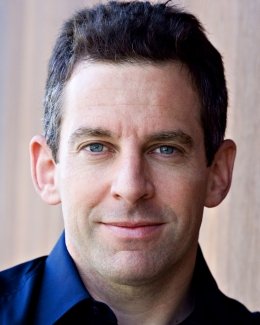
Harris: Morality must relate at some level to the well-being of conscious creatures. If there are more and less effective ways for us to seek happiness and to avoid misery in this worldand there clearly arethen there are right and wrong answers to questions of morality.
Q: Are you saying that science can answer such questions?
Harris: Yes in principle. Human well-being is not a random phenomenon. It depends on many factorsranging from genetics and neurobiology to sociology and economics. But clearly there are scientific truths to be known about how we can flourish in this world. Wherever we can act so as to have an impact on the well-being of others questions of morality apply.
Q: But cant moral claims be in conflict? Arent there many situations in which one persons happiness means anothers suffering?
Harris: There as some circumstances like this and we call these contests ?zero-sum.? Generally speaking however the most important moral occasions are not like this. If we could eliminate war nuclear proliferation malaria chronic hunger child abuse etc.these changes would be good on balance for everyone. There are surely neurobiological psychological and sociological reasons why this is sowhich is to say that science could potentially tell us exactly why a phenomenon like child abuse diminishes human well-being.
But we dont have to wait for science to do this. We already have very good reasons to believe that mistreating children is bad for everyone. I think it is important for us to admit that this is not a claim about our personal preferences or merely something our culture has conditioned us to believe. It is a claim about the architecture of our minds and the social architecture of our world. Moral truths of this kind must find their place in any scientific understanding of human experience.Q: What if some people simply have different notions about what is truly important in life? How could science tell us that the actions of the Taliban are in fact immoral when the Taliban think they are behaving morally?
Harris: As I discuss in my book there may be different ways for people to thrive but there are clearly many more ways for them not to thrive. The Taliban are a perfect example of a group of people who are struggling to build a society that is obviously less good than many of the other societies on offer. Afghan women have a 12% literacy rate and a life expectancy of 44 years. Afghanistan has nearly the highest maternal and infant mortality rates in the world. It also has one of the highest birthrates. Consequently it is one of the best places on earth to watch women and infants die. And Afghanistans GDP is currently lower than the worlds average was in the year 1820. It is safe to say that the optimal response to this dire situationthat is to say the most moral responseis not to throw battery acid in the faces of little girls for the crime of learning to read. This may seem like common sense to usand it isbut I am saying that it is also at bottom a claim about biology psychology sociology and economics. It is not therefore unscientific to say that the Taliban are wrong about morality. In fact we must say this the moment we admit that we know anything at all about human well-being.
Q: But what if the Taliban simply have different goals in life?
Harris: Well the short answer isthey dont. They are clearly seeking happiness in this life and more importantly they imagine that they are securing it in a life to come. They believe that they will enjoy an eternity of happiness after death by following the strictest interpretation of Islamic law here on earth. This is also a claim about which science should have an opinionas it is almost certainly untrue. There is no question however that the Taliban are seeking well-being in some sensethey just have some very strange beliefs about how to attain it.
In my book I try to spell out why moral disagreements do not put the concept of moral truth in jeopardy. In the moral sphere as in all others some people dont know what they are missing. In fact I suspect that most of us dont know what we are missing: It must be possible to change human experience in ways that would uncover levels of human flourishing that most of us cannot imagine. In every area of genuine discovery there are horizons past which we cannot see.Q: What do you mean when you talk about a moral landscape?
Harris: This is the phrase I use to describe the space of all possible experiencewhere the peaks correspond to the heights of well-being and valleys represent the worst possible suffering. We are all someplace on this landscape faced with the prospect of moving up or down. Given that our experience is fully constrained by the laws of the universe there must be scientific answers to the question of how best to move upwards toward greater happiness.
This is not to say that there is only one right way for human beings to live. There might be many peaks on this landscape?but there are clearly many ways not to be on a peak.Q: How could science guide us on the moral landscape?
Harris: Insofar as we can understand human wellbeing?? we will understand the conditions that best secure it. Some are obvious?? of course. Positive social emotions like compassion and empathy are generally good for us?? and we want to encourage them. But do we know how to most reliably raise children to care about the suffering of other people? I??m not sure we do. Are there genes that make certain people more compassionate than others? What social systems and