
Notice
Qoo10 made a new policy that option price cannot exceed 100% of the item price. Therefore for those oils which worth more than S$17.8, plese visit
http://www.qoo10.sg/GMKT.INC/Goods/Goods.aspx?goodscode=413462088
WHAT MAKES OUR OILS SPECIAL?
The integrity of an essential oil is determined by the botanical from which it was derived, proper harvest, and gentle extraction methods to bring the finished products to life. At NOW® Solutions, we utilize exceptional raw materials from growers who share our passion for quality from start-to-finish. This constant attention to detail ultimately allows NOW® Solutions to bring you essential oils that are 100% pure and unsurpassed in quality and purity.
Our oils are tested using Fourier Transform Infrared Spectroscopy (FTIR) and Gas Chromatography (GC) to ensure the highest retention of active aromatherapeutic constituents.
EXTRACTION METHODS
Before an essential oil becomes an essential oil, it must first be extracted from its original botanical. To accomplish this, one of three specialized extraction methods are used. Extraction is a critical step in the essential oil manufacturing process, and must be performed at just the right time, depending on the plant and oil in question. Proper extraction will yield the strongest concentration of active compounds, while incorrect or incomplete extraction efforts may significantly affect the finished oil’s potency.
Distillation, Water or Steam
With distillation, essential oils are converted into vapor and then condensed into liquid form where they can be bottled for your enjoyment. It is a popular, natural and precise way to gently extract essential oils without damaging the botanical.
Cold Expression
Cold press extraction is used primarily for citrus extracts, such as orange, lemon, lime, bergamot and tangerine. It involves carefully applying a cold “press” to the botanical to extract the highest concentration of volatile oils.
Solvent Extraction
Fragile botanicals such as Rose and Jasmine have a difficult time surviving the distillation process. Solvent extraction method is used most commonly when working with Essential Oil blends, such as absolutes from Rose and Jasmine. Sometimes solvents are necessary to coax the essential oils out of the botanical material, and we ensure that these are removed to ensure safety.
USING ESSENTIAL OILS
Essential oils offer boundless versatility and can be used in a number of ways to enrich the quality of life. From aromatherapy and massage, to personal care and household applications, they can serve as wonderful additions to any home or lifestyle. Essential oils are intended for aromatherapeutic, and in some cases, external use. They should be kept away from direct sunlight and used with caution at all times.
Diffusion—Diffusion provides continuous distribution of the oil’s scents and active constituents, making it easy to absorb them within the body. The nerve fibers of the olfactory cavity do not pass through the brain’s switching station, and are therefore immediately recognized by the limbic system. Diffusion is an effective and non-invasive way to reap the benefits of essential oils.
Skin Applications—Certain oils can be applied to the skin, though it is very important to use caution when doing so. 100% essential oils are highly concentrated and may need to be diluted for safe, topical use. Carrier oils, such as grape seed and jojoba, are two of the most popular carrier oils and are ideal for diluting. For more information on topical applications, we suggest consulting an aromatherapist or a credible aromatherapy book such as the one listed below.
Bath—Adding just a few drops of Lavender, Chamomile, Eucalyptus or other essential oils to a warm bath is a wonderful way to unwind after a long, stressful day. As with all highly concentrated essential oils, be cautious when allowing any essential oil to come into contact with the skin, as some may cause skin irritation or discomfort. They can make your tub slippery too, so watch your step.
Cosmetics—Some essential oils can be complementary to your favorite cosmetic and personal care products. These include soaps and body wash, shampoos and conditioners, moisturizing lotions and creams, and many others. Always make sure that the oil you’re working with is appropriate, or diluted appropriately, for topical use.


How To use Essential Oils Work?
Essential oils enter the body in three ways. They can be:
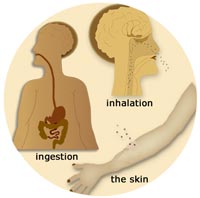
Within each of these, there are many different kinds of application methods. For example, you can apply essential oils topically using compresses, sprays, baths, or massaging them into the skin.
How do I choose an application method?
The application method chosen depends on the desired effect and the essential oil selected. For example, some essential oils are irritating to the skin because of their chemistry. These would need more dilution or might better be used by inhalation.
Once you have purchased an essential oil, the application method depends on the condition to be treated and the desired effect. For example:
How do I apply essential oils to the skin?
Essential oils can be applied to the skin using a variety of techniques. It is important to note that most essential oils can not be applied directly to the skin without being diluted.
How do I prepare a solution?
As a rule of thumb, essential oils should be diluted in a carrier substance (vegetable or nut oil, or water) at no greater concentration than 3-5%.
That means if you have one teaspoon (5cc) of carrier, you would add 3 drops of pure essential oil. This would make a 3% solution that could be used on a portion of the body.
For massage or for application over large areas of the body, a 1% solution (meaning, one drop of essential oil in one teaspoon of carrier) is generally a safe concentration. For infants, using a 0.25% solution is recommended (.5% for toddlers).
Note: If you use water as a carrier, be sure to shake or mix your solution well before application.
What carrier oil should I use?
Common carrier oils are often available in natural foods stores or stores that specialize in natural bath and body products. Organic and cold-pressed carrier oils are preferred and examples include sweet almond oil, apricot oil, jojoba oil, and avocado oil. These oils do not have a strong smell of their own. They should be kept refrigerated until used and should be discarded if they smell rancid. (Oils typically keep about a year if refrigerated.)
For wound care, an ideal essential oil would be gentle to the skin and antimicrobial. Some essential oils can be used in different ways. For example, true lavender essential oil can be used on the skin for cuts and minor burns, and it can be inhaled to promote relaxation and sleep. Lavender is one of the few essential oils that can be used undiluted on small areas of the skin.
What are the techniques?
.
DO NOT use the following essential oils on skin unless you are directed by an essential oil book or other professionals :
Bergamot, Cinnamon Cassia, Clove, Grapefruit, Lemon, Lime, Orange, Tangerine. ALWAYS read the label before use.
ALWAYS perform a patch test if you are using an essential oil on your skin for the first time. Mix 1 drop of essential oil with 1 teaspoon of carrier oil and apply a small amount of the mixture to your arm. If there are no itching, redness or swelling, it should be safe to use the oil.
How can I inhale essential oils?
Essential oils can be inhaled using a variety of techniques and devices.
Aromatherapy for Everyone, by PJ Pierson and Mary Shipley, 137 Pages Paperback Book

For the beginner, Aromatherapy for Everyone will provide sound advice to get started on this ancient and proven natural therapy.
For those who have already discovered the joys of aromatherapy, this book makes a great reference.
"Aromatherapy for Everyone makes the subject fun, practical and immediately accessible to all who wish to use essential oils for aromatherapy. From the Fun Fact section to the useful tips on aromatherapy for health and delight, this book is an essential guide to the subject." - Steven Foster


