
Viteyes AREDS 2 Capsules, 180 Count
Product Description
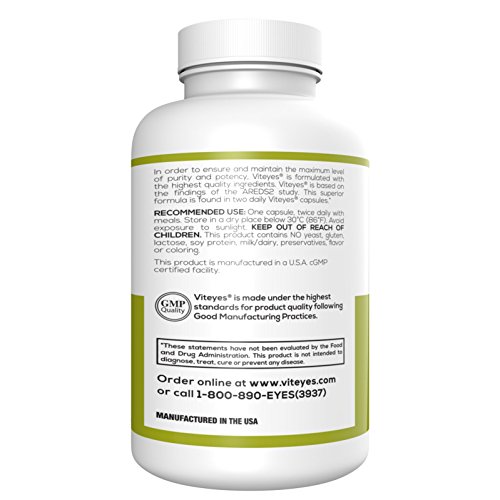
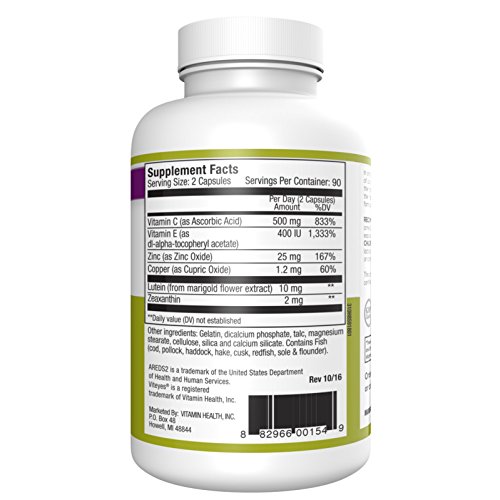
Viteyes "Classic" AREDS 2 Formula is based on the findings of the AREDS 2 study. Completed in 2013, AREDS2 was a 5-year nationwide study sponsored by the National Eye Institute (NEI). The AREDS2 study was a follow up on the original AREDS study. AREDS2 resulted in the NEI's recommendation to revise the original AREDS formula to help further slow the progression of vision loss from AMD.* AREDS 2 analyzed the original AREDS formula from NEI's 2001 recommendation with and without beta-carotene. This was due to the concern of an increased risk of lung cancer for smokers and former smokers taking high doses of beta-carotene. The AREDS 2 study also researched adding lutein and zeaxanthin. What were the results of the AREDS 2 study? Omit the high dose of Beta-Carotene, Add Lutein & Zeaxanthin: AREDS 2 participants who took lutein and zeaxanthin and no beta-carotene reduced their risk of developing advanced stages of AMD by 18% compared to those in AREDS 2 who took the original AREDS supplement with beta-carotene. As a result, the NEI's AREDS 2 suggests modifying the AREDS formula by omitting beta-carotene and adding lutein and zeaxanthin. Zinc Levels: “In the original AREDS study, the dose for zinc was set high (80 mg) because a previous small trial had found that high-dose zinc was beneficial for AMD. However, some nutritionists were concerned the dose was too high.”* The AREDS 2 study tested zinc at 80 mg and 25 mg. The results showed that when lowering zinc there was “no statistically significant effect on progression to advanced AMD.”** *NEI website 2013. AREDS 2 Media Q&A http://www.nei.nih.gov/areds2/MediaQandA.asp **AREDS2 Research Group. "Lutein/Zeaxanthin and Omega-3 Fatty Acids for Age-Related Macular Degeneration. AREDS2 Controlled Randomized Clinical Trial." JAMA, published online May 5, 2013. These statements have not been evaluated by the Food Y Drug Administration. This product is not intended to diagnose, treat, cure or prevent any disease.Feature
Viteyes® Classic AREDS 2 Capsules is based on the clinically effective formula tested by the National Eye Institute (NEI") in its 2013 AREDS2 study
