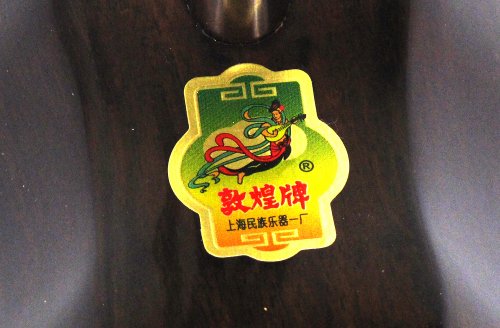
Studio : Dunhuang Publisher : Dunhuang Product Description
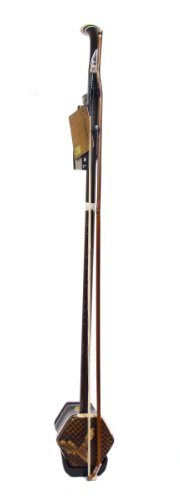
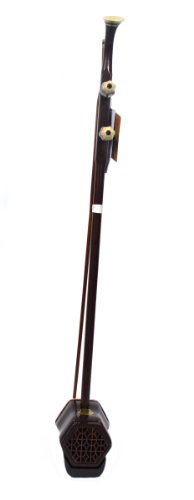
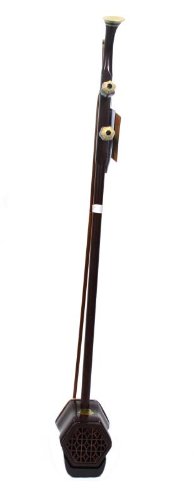
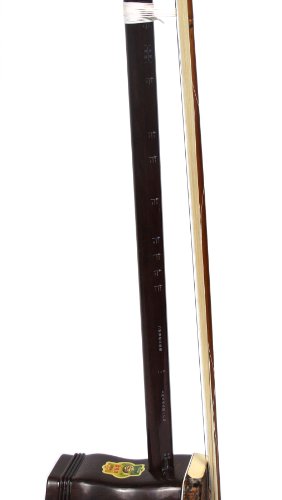
This Chinese ErHu is constructed from Bubinga wood masterfully selected by the artisans from Dunhuang. Bubinga is an exceptionally beautiful, hard and dense wood. Its brownish-purple color holds a resemblance to rosewood. And it is as hard as rosewood, but has a finer texture making it less porous. With warm even tones in the wood and a subtle waving pattern makes the appearance of this wood visually rich. In terms of tonewood, Bubinga offers consistent volume, great projection and a nice reverberation sound. Prized as a popular wood for guitars and furniture making, Bubinga brings a dark and woody overtone that is perfect for traditional Chinese musical instruments.
Other materials include: strings that are German steel wrapped nylon, horsehair bow.
This Erhu measures: 32" x 5 inches
Product History:
The Erhu (pronounced Err-hoo) is a two-stringed bowed traditional musical instrument. Sometimes known as "'Chinese violin" the first part "Er" means the number two and the second part "Hu" means from ancient times. It is believed to have origins as far back as the 10th century in China.
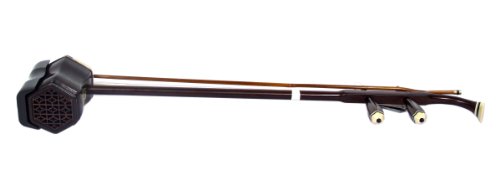
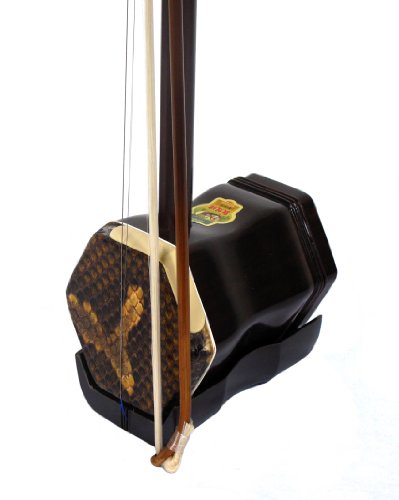
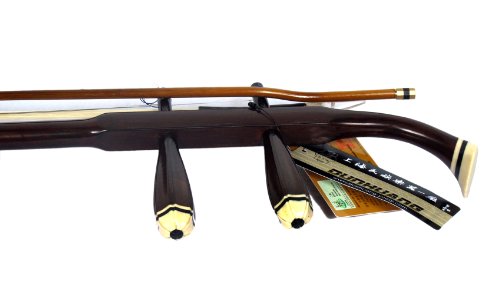
The Erhu has several intricate parts: the neck is long and stick-like while the top has two large tuning pegs, but the most impact comes from the small resonator body (sound box). Two strings are attached from the top pegs and stream down to the base of the instrument. A separate horse-hair bow is the final part.
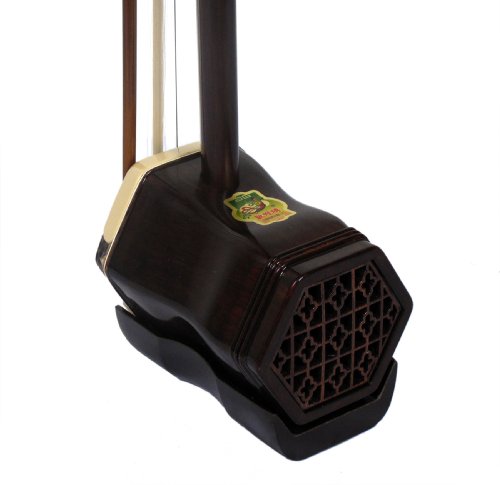
To play the ErHu, the musician holds the instrument in his/her lap, straight up and down and then, much like playing a violin the bow is pulled at different angles to articulate specific sounds. The front has python skin which is tightly covered to amplify the vibrations of the strings. The sound comes out of the resonator from the back. In terms of tuning, the two strings of the ErHu is usually tuned D and A.
0
|