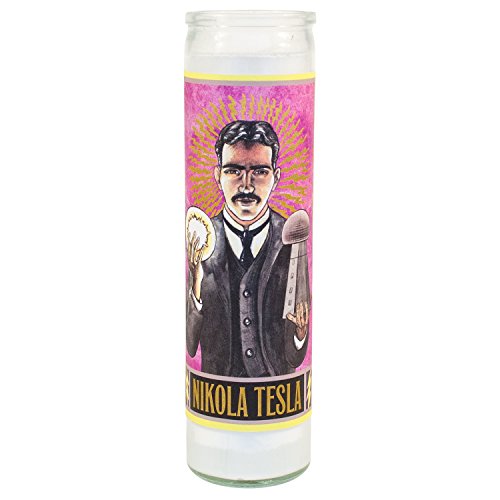
NIKOLA TESLA SECULAR SAINT CANDLE - 8.5 INCH GLASS PRAYER VOTIVE
FEATURES
- SHOWS YOUR DEVOTION - to Nikola Tesla, the patron saint of inventors, earthquakes, and the fastidious. The perfect gift / present for the humanist, atheist, nihilist, agnostic, spastic, bombastic, or totally regular person in your life.
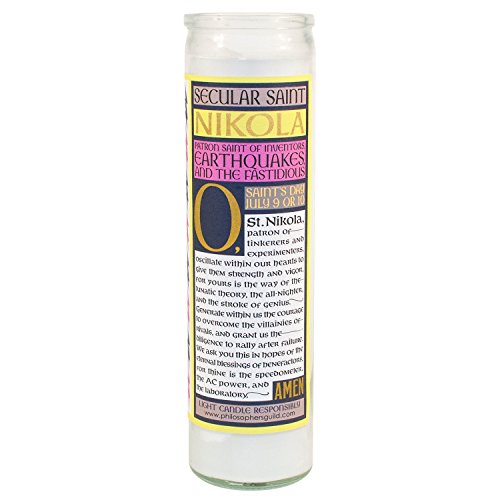
- ADDS FIGURATIVE AND LITERAL FLARE - Secular Saints candles are dedicated to cultural icons you can believe in. The front of each candle features the saint's image. The back of the candle shows their patronage, saint's day, and a unique prayer to inspire and enlighten.
- ANSWERS AT LEAST TWO PRAYERS - UPG's Secular Saints votives are guaranteed to grant your desires ("I need romantic lighting") and aid the powerless ("I need light until the power comes back on").
- MEASURES - 8.5" tall, 2" diameter. Made of glass. This candle will look great next to your cell phone charger. Give one to your favorite pigeon.
- MORE SAINTS AVAILABLE - Including Abraham Lincoln, Albert Einstein, Betty Friedan, Charles Darwin, Frida Kahlo, Jane Austen, John Lennon, Kurt Vonnegut, Margaret Sanger, Nikola Tesla, Noam Chomsky, Salvador Dali, Sigmund Freud, Socrates, Virginia Woolf, and William Shakespeare
SPECIFICATION
| Package Dimension | 6.86 x 6.86 x 22.86 Cm |
| Package Weight | 0.64 ~ 0.76 Kg |
| Product Group | Home |
| Availability | Available (Usually ships in 1-4 business days) |
DESCRIPTION