
300Mbps Wireless N Access Point
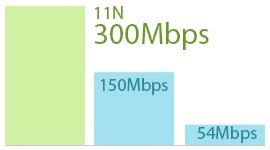
With three omni-directional antennas?? the TL-WA801ND adopts MIMO (Multi Input Multi Output) and CCA (Clear Channel Assessment) technologies to deliver optimal wireless performance?? transmission rates?? stability?? and coverage. Depending on the mode the AP operates at?? it can be used to expand network range?? to create separate networks?? or to connect a wired device to a wireless network?? all at up to 300Mbps.
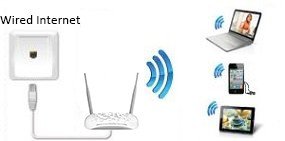
Access Point Mode (Default)
Connect to a wired network and transform wired Internet access into wireless allowing multiple devices/users to share the Internet.
Typical Applications: Home?? office?? and places where only wired network is available. LAN parties?? meetings and other environments where a temporary wireless network is needed. Hotels where wireless internet or multiple devices are charged for a higher fee.
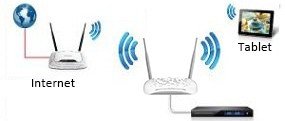
Repeater Mode
Receives and broadcasts your existing wireless signal to extend wireless range (the network SSID and password will not change). This mode is especially useful for covering areas that receive little or no wireless signal strength.
Typical Applications: Used in a large house?? office?? warehouse or anywhere the existing signal is weak and unstable.
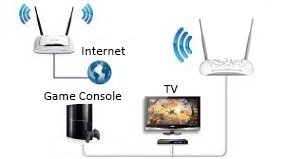
Client Mode (Wi-Fi to Ethernet Mode)
Connects to another device via Ethernet cable and acts as an external adaptor to send/receive wireless signal from your wireless network.
Typical Applications: For your Smart TV?? Media Player?? game console?? or other devices with a built-in Ethernet port. Connect your device to the TL-WA801ND to make it Wi-Fi enabled?? granting it access to your wireless network.
Bridge Mode (WISP Mode)
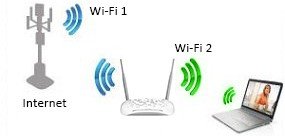
Connect to an outdoor WISP (Wireless Internet Service Provider) or public Wi-Fi to allow multiple devices/users share the same wireless internet connection.
Typical Applications: For WISP or public Wi-Fi subscribers?? create your private wireless network.
Multi-SSID Mode
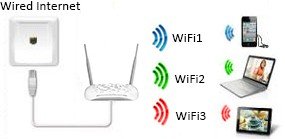
Create up to four different SSIDs for different groups of users. You can also assign VLANs to those networks to make them accessible or inaccessible to each other.
Typical Applications: Used for small offices?? shops?? and other places where multiple Wi-Fi networks need to be provided to visitors
Passive PoE Supported
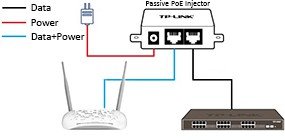
Although the TL-WA801ND doesn't support 802.3 af/at PoE?? it comes with a Passive PoE Injector that can transmit data and power via an Ethernet cable to the access point. The distance between the injector and the access point is up to 100 feet (30 meters)?? allowing you to place the AP in a position such as wall or ceiling where it can get the best signal possible.
Other Features
Package Contents
TP-LINK Indoor Access Point Series
| Which Access Point is Right for Me? | TL-WA701ND | TL-WA801ND | TL-WA901ND |
|---|---|---|---|
 |  |  | |
| Product Name | 150Mbps Wireless N Access Point | 300Mbps Wireless N Access Point | 300Mbps Wireless N Access Point |
| Maximum Wireless Speed | 2.4GHz: 150Mbps | 2.4GHz: 300Mbps | 2.4GHz: 300Mbps |
| LAN Port Throughput | 10/100M | 10/100M | 10/100M |
| Number of LAN Port | 1 | 1 | 1 |
| Antenna | 1 detachable antenna | 2 detachable antennas | 3 detachable antennas |
| Five Modes | ? | ? | ? |
| WPS | ? | ? | ? |