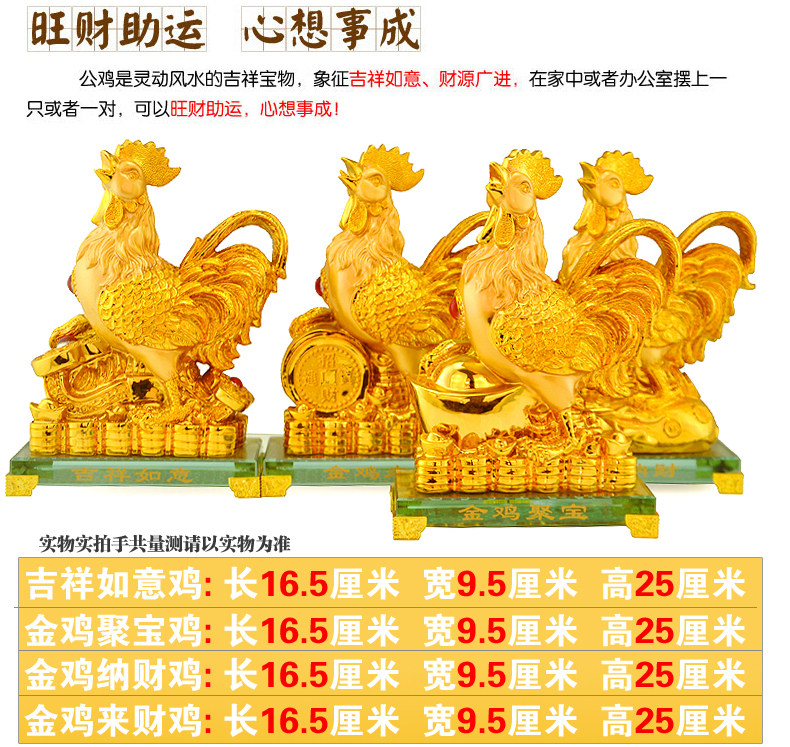
开光招财公鸡摆件现代家居工艺品生肖雄鸡风水客厅办公室乔迁礼品
The Rooster is a symbol of courage, dependability, diligence, self-determination of perseverance. Often related to the yang principle and features such as loyalty and bravery, the Rooster is a fine feng shui symbol to keep in the home.
The Rooster is always alert and is said to be ready to “peck away” any danger to your relationship or career; this is visible through his gorgeously-formed beak and his ever-attentive eyes. Giving your loved one a Rooster figure to keep in the office will serve to be useful, as the Rooster is beieved to help keep an eye open to eliminate the chance of third-party interference.
Keeping a Rooster in your office is reputed to greatly assist you if you have a political career, as it will keep luck with you and prevent back-stabbing or betrayals that you didn’t see coming. When placed in the South corner, the Rooster is said to be an ideal enhancer of recognition, reputation and accomplishment luck.
Excellent gift for people in political career or people worried about straying spouse.