Item Descriptions:
color:
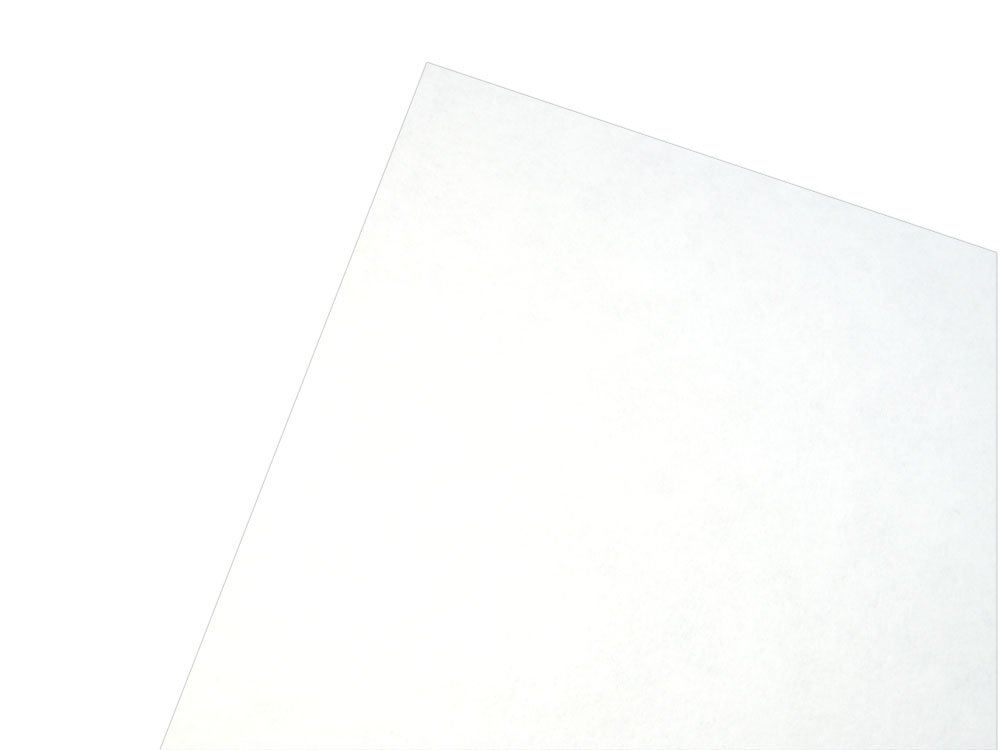
Magazine paper white plain
| Size:
A3 size 50 sheets
Echizen Washi paper, which requires very advanced technology to truly beautify it.
History of Echizen Washi
At present Echizen (Imaichi Goka), a wide variety of Japanese paper such as high-class hand-made Japanese paper which inherits traditional techniques, mass-produced machine sawed Japanese paper, etc. is being produced.
In Echizen there is a legend of "God" of paper-making that is unprecedented throughout the country.
Approximately 1,500 years ago, when Prince Men's Great Border (the succeeding Emperor) was in Echizen, a really beautiful princess appeared upstream of the Okta River.
"Since this land is blessed with pure valley water, it is good to live a life by making paper with this water." That is what I said and I taught the villagers how to make paper.
Only the villagers who were pleased with this heard the name to the princess just answered "Only those who live upstream of the Okadai River", they disappeared as they are.
Since then the villagers started paper making according to this teaching.
After this the villagers called the princess "Kawakami goshi" and worshiped her virtue, came to festival at Okuta shrine (Otaki shrine).
(Even now the people of the Imaichi Gokaku are deeply religious in Kawakami God and we are doing a magnificent festival every 3rd, 4th, 5th and October of May.)
Entered the Middle Ages, Nobunaga Oda and Toyotomi Hideyoshi got high prize ratings from Echizen Tori and Echizen Temple from the authorities of the time in the Middle Ages, and in the Edo era, he made the paper of the Shogunate and clerk paper, gradually took over the name of the Echizen Japanese paper producing area
It has increased to the whole country.
Echizen Washi paper, the place where Japan is proud of the world of Japanese paper.
Since then, in the transition of Meiji, Taisho and Showa era, we have continued the growth and development as the production area of high-class Japanese paper by the efforts of the people of the production area while repeating the history of prosperity and decline.
Furthermore, the name of Echizen paper is known throughout the country with strong instructions such as Yokoyama Taiki and many artists.
Beginning in 1955, traditional techniques of traditional handmade techniques were utilized in machine making, and the volume of production was dramatically increased through mass production and cost reduction.
At the same time, paper processing industries such as spraying, screening, foil pushing, laminating, and flea paper gradually increased, and product development with a wide range of added value has been advanced.
Currently production activities are continuing as one of the leading Japanese washi production areas in terms of quality, variety and production volume.
About Japanese paper
To say "Japanese paper" in one word, it has too many different facial expressions and properties.
Not only the difference between raw materials and paper making techniques but also the difference in the climate and culture of the production area is characteristic of Washi.
Features of Washi
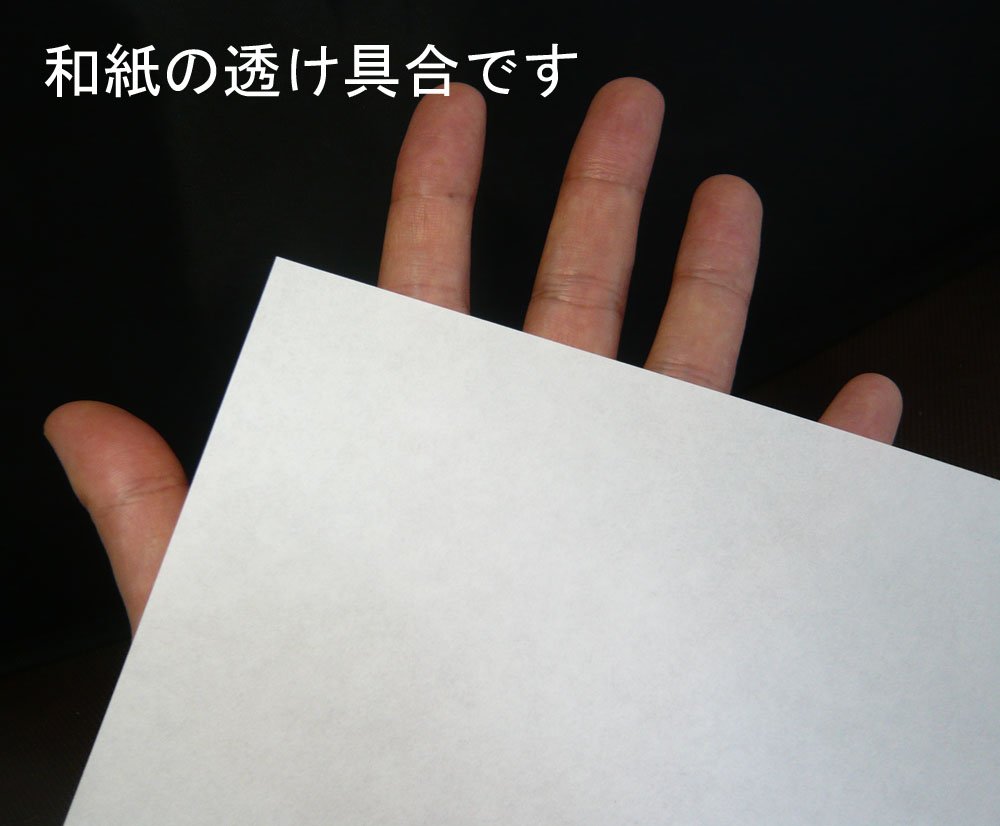
Because the fiber is long, the folding endurance is large and the folding is strong
Tearing strength is strong and it is hard to break
High breathability
Strong intensity
Little yellow change after long time
Due to its strong wet strength, it is strong even when wet
The degree of stretching when wet, it is easy to stick.
Also, even after drying, the surface does not hit the waves
Very good for the environment (easy to recycle)
Fashion and artistic are strong
Etc.
Features:
- Please enter model number Confirm this is compatible:
- It is a fine solid white paper.
- You can use it widely as a basic Japanese paper such as thank-you letter, greeting card, catalog, stationery note.
- It is finished in a beautiful white color.
- It is an Echizen Japanese paper boasting a tradition of 1,500 years.
- Since we are making mechanical papers, quality is even and we are making it even easier to use.
- Paper size A3 size 29.7 x 42 cm The thickness of paper is about 0.13 mm basis weight 70 g / m2.
- It is 50 pieces, which you can use a lot.
- made in Japan
Product information:
Shipping Weight: 190 g
Package Dimensions: 0.71 x 18.39 x 25.81 cm
SHIPPING METHOD
Delivered directly from Japan by Japan Post. It will take 3 to 5 business days to prepare the order for shipping. We guarantee careful packing and safe shipping.Please note that in some cases additional import or VAT charges may incur and have to be borne by the client.
1. Japanpost registered mail
Shipment by Japanpost Registered Mail (Standard). Trackable any time with tracking number. Insurance is not available. Delivery time usually is between 1-3 weeks from the date of dispatch. Some items are not eligible for Standard Shipping.
2. Qxpress Standard
Shipment by Qxpress standard service. Trackable at any time with tracking number. Registered and insured up to a value of item price and shipping fees.Delivery time is usually between 5-10 business days from the date of dispatch.
3. EMS
Shipment by Expedited Mail Service. Trackable at any time with tracking number. Registered and insured up to a value of $200 and usually delivered in 2-6 business day from the date of dispatch.

| Japanpost registered mail | Qexpress | EMS | |
|---|---|---|---|
| Shipping Method | Japanpost Registered Mail (Standard) | Standard Qexpress | EMS (Expedited Mail Service) |
| Trackable | Yes | Yes | Yes |
| Insured | N/A | Yes (Up to item price and shipping fees) | Yes (Up to $200.00) |
| Asia | 1-3 weeks | 5-10 days | 2-5 days |
| Oceania; North America; Central America and the Middle East | 2-4 weeks | 6-14 days | 2-6 days |
| Europe | 2-4 weeks | 6-16 days | 3-8 days |
| South America and Africa | 2-4 weeks | 10-18 days | 4-8 days |
NOTICE:
- For overseas delivery, please be aware that damage to the outer box can be seen.
- If you would like to avoid as much damage as possible, please choose the EMS shipping method.
"According to Qoo10 guide line,overseas shipping fees will be charged to you extra if you choose Qxpress standard shipping.We recommend you to compare the total price of your purchase with EMS."
