Pumpkin seeds nutrition facts
Pumpkin seeds (pepita) are edible kernels of fruit pumpkin. The seeds, in-fact, are concentrated sources of many health-benefiting vitamins, minerals, anti-oxidants, and essential amino-acids such as tryptophan, and glutamate.
Pumpkin fruit is a squash-like gourd in the Cucurbitaceae family of vegetables native to Mexico. Scientific name: Cucurbita pepo. In the Central Americas, hulled and gently roasted pumpkin kernels are popularly known as Pepita.
|
|
|
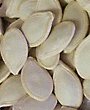
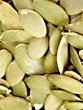
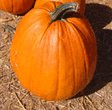
| Pumpkin (whole) seeds. Note for whole seeds with ash-white color husk. | Pumpkin kernels. Note for olive green color kernels. | Mature pumpkin fruit. |
The pumpkin fruit, in general, is grown as a field vegetable crop. Its seeds, at the same time, have been in use as food, and to extract pumpkin seed oil since centuries. In fact, in some parts of central Europe (Styrian province in Austria, Slovenia and Hungary), pumpkins are being cultivated solely for their seeds, as a major oil-seed crop at a commercial scale.
Generally, the pumpkin fruit is allowed to mature completely in order to obtain good-quality seeds. Each fruit contains up to 500 cream-white husky seeds located at its central hollow cavity; interspersed in between net like mucilaginous network. The seeds are semi-flat, feature typical ovoid shape with a conical tip. Inside, its kernels feature olive-green color, sweet, buttery in texture and nutty in flavor. Pepitas enjoyed as snack, added in desserts and in savory dishes.
Health benefits of pumpkin seeds
Crunchy, delicious pumpkin seeds are high in calories; about 559 calories per 100 g. In addition, they are packed with fiber, vitamins, minerals, and numerous health promoting antioxidants.
Their high calorific value mainly comes from protein and fats. Nonetheless, the kernels are especially rich in mono-unsaturated fatty acids (MUFA) like oleic acid (18:1) that helps lower bad LDL cholesterol and increases good HDL cholesterol in the blood. Research studies suggest that Mediterranean diet which is liberal in monounsaturated fatty acids help to prevent coronary artery disease and stroke risk by favoring healthy blood lipid profile.
Pumpkin seeds carry good-quality protein. 100 g seeds provide 30 g or 54% of recommended daily allowance of protein. In addition, the seeds are an excellent source of amino acid tryptophan and glutamate. Tryptophan is converted into serotonin and niacin. Serotonin is a beneficial neuro-chemical often labeled as nature's sleeping pill. Further, tryptophan is the precursor of B-complex vitamin, niacin (60 mg of tryptophan = 1 mg niacin).
Pumpkin seeds are a very good source of anti-oxidant vitamin E; contain about 35.10 mg of tocopherol-gamma per 100 g (about 237% of RDA). Vitamin E is a powerful lipid soluble antioxidant. It prevents tissue cells from the free radical mediated oxidant injury. Thus, it helps maintain the integrity of mucusa and skin by protecting from harmful oxygen-free radicals.
Pumpkin kernels are also an excellent source of B-complex group of vitamins such as thiamin, riboflavin, niacin, pantothenic acid, vitamin B-6 (pyridoxine) and folates. These vitamins work as co-factors for various enzymes during cellular substrate metabolism in the human body. In addition, niacin helps in the reduction of LDL-cholesterol levels in the blood. Along with glutamate, it enhances GABA activity inside the brain, which in turn reduces anxiety and nervous irritability.
Furthermore, its seeds contain good amounts of essential minerals like copper, manganese, potassium, calcium, iron, magnesium, zinc and selenium. Just as in pine nuts, pumpkin seeds too are very rich in manganese (provide 4543 mg per 100 g, about 198% of daily-recommended intake). Manganese is an all-important co-factor for antioxidant enzyme, superoxide dismutase. It is therefore, consumption of pumpkin kernels help develop resistance against infectious agents and scavenge harmful oxygen-free radicals.
Medicinal values of pumpkin seeds.
Research studies suggest that pumpkin seeds has DHEA (Di-hydro-epi-androstenedione) hormone blocking actions at the receptor levels. Exposure to high DHEA levels may lead to gonadal tumours. Thus, the seeds may cut the risk of prostate and ovarian cancers in human.
In addition, experimental studies suggest that certain phytochemical compounds in pumpkin seed oil may have a role in prevention of diabetic nephropathy (diabetic kidney disease).