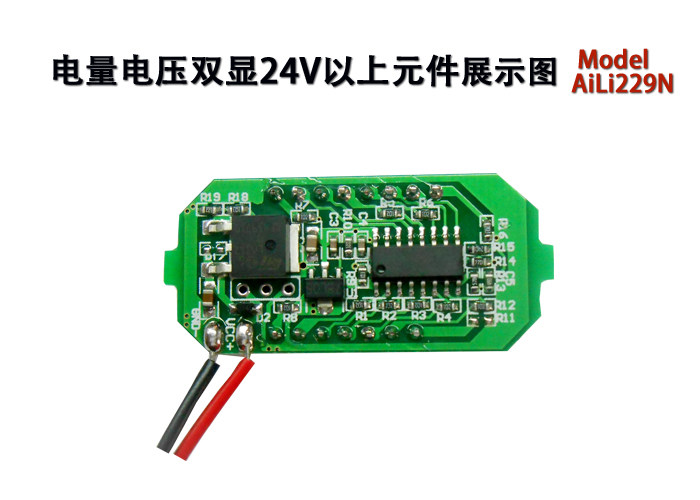
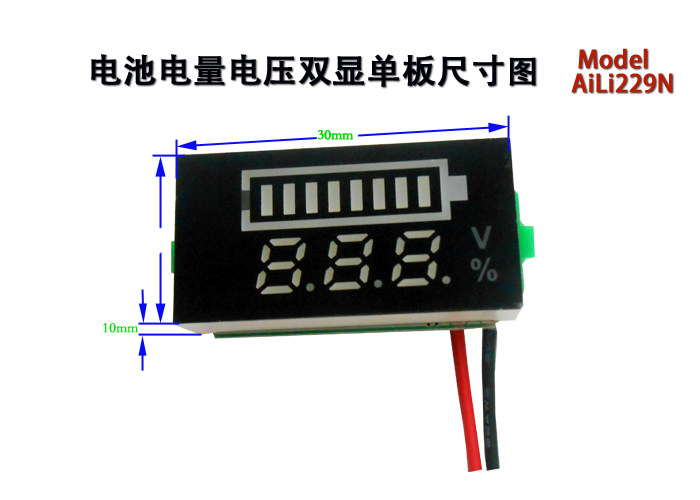
Product parameters
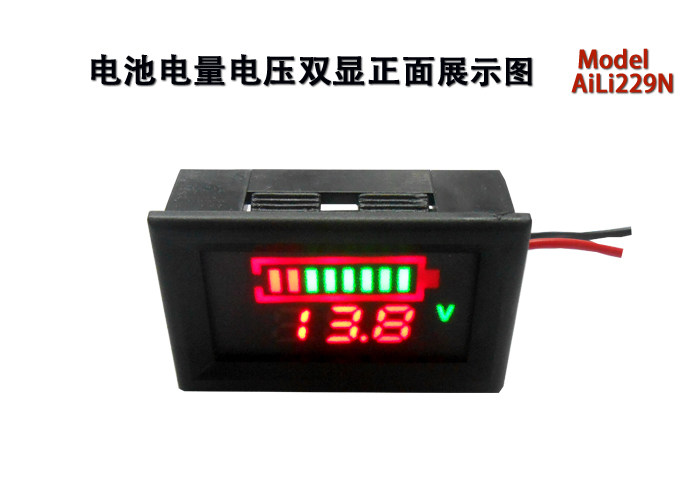
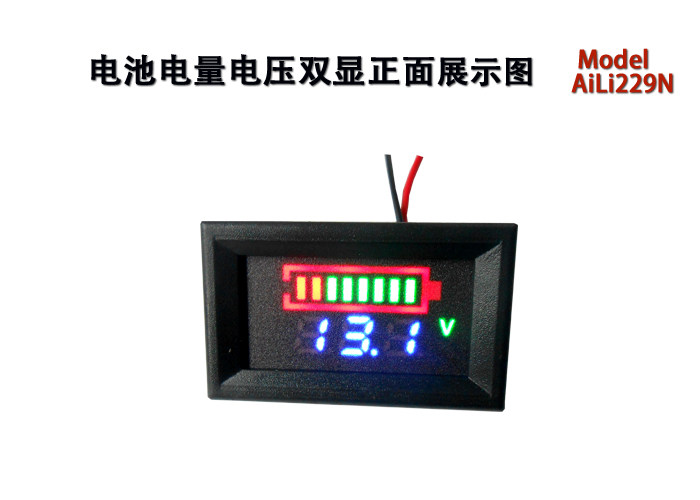
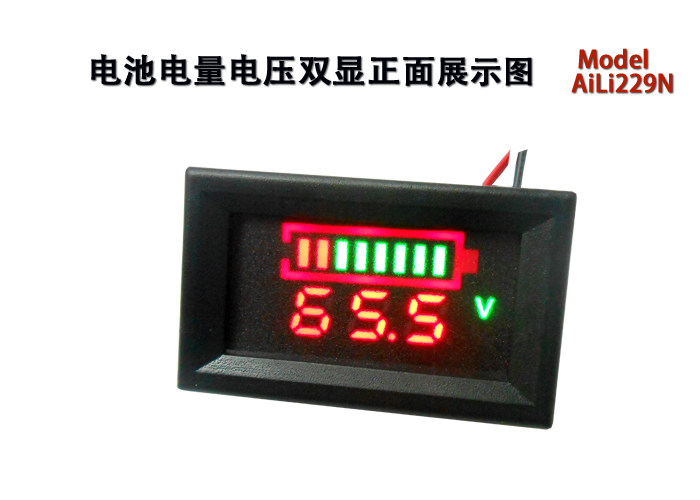
1.8 segment power resolution: 10% 25% 40% 50% 60% 75% 90% 100%
2 voltmeter accuracy of about 3%
3 working temperature: -10 ~ +65 °C
4. Operating Humidity: 10 to 80% (without condensation)
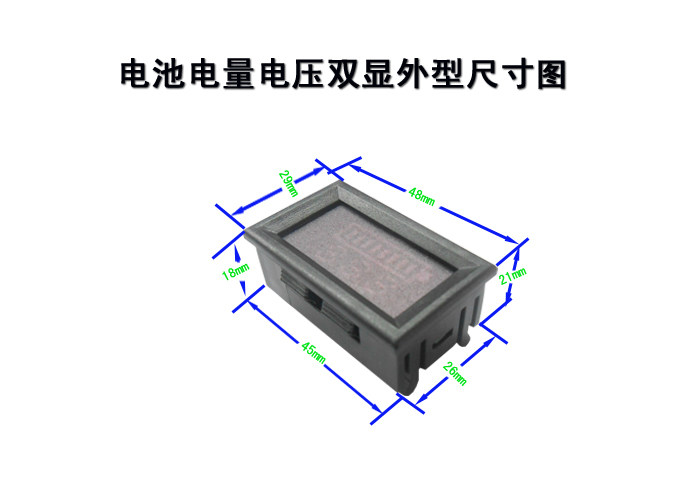
5. Opening size: 45×26×18mm
Li-ion display power parameters: (The following data is a reference value, there will be about 2% error range, do not shoot with high accuracy required)
Battery voltage is greater than N × 3.0V, light 1 grid power (Remark: N is the number of battery cells)
Battery voltage is greater than N × 3.1V, light 2 grid power
Battery voltage is greater than N × 3.3V, light 3 grid power
Battery voltage is greater than N × 3.4V, light 4 grid power
Battery voltage is greater than N × 3.6V, light 5 grid power
Battery voltage is greater than N × 3.7V, light 6 grid power
Battery voltage is greater than N × 3.8V, light 7 grid power
Battery voltage is greater than N × 3.9V, bright 8 grid power
12V lead-acid voltage range: (4 strings of lithium iron phosphate batteries can be used)
Battery voltage greater than 9.7V, light 1 grid power
Battery voltage greater than 10.2V, light 2 cells
Battery voltage greater than 10.7V, light 3 grid power
Battery voltage greater than 11.1V, light 4 grid power
Battery voltage greater than 11.7V, light 5 grid power
Battery voltage greater than 12.2V, light 6 cells
Battery voltage greater than 12.6V, light 7 grid power
Battery voltage greater than 13.0V, bright 8 cells
24V lead-acid voltage range: (8-series lithium iron phosphate battery can be used) Voltage above 6.5 starts to show, voltage above 60V is easy to burn out
Battery voltage greater than 19.7V, light 1 cell
Battery voltage greater than 20.9V, light 2 grid power
Battery voltage greater than 21.6V, light 3 grid power
Battery voltage greater than 22.6V, light 4 grid power
Battery voltage greater than 23.6V, light 5 grid power
Battery voltage greater than 24.6V, light 6 grid power
Battery voltage greater than 25.4V, light 7 grid power
Battery voltage greater than 26.3V, light 8 cells
48V lead-acid voltage range: (15 or 16 series lithium iron phosphate batteries can be used) Voltage above 6.5 to start display, 65V or above is easy to burn out
Battery voltage greater than 39V, light 1 cell
Battery voltage greater than 40.6V, light 2 grid power
Battery voltage greater than 43V, light 3 grid power
Battery voltage greater than 44.3V, light 4 grid power
Battery voltage greater than 46.2V, light 5 grid power
Battery voltage greater than 48.10V, light 6 grid power
Battery voltage greater than 50.V, light 7 grid power
Battery voltage greater than 51.9V, light 8 grid power
60V lead-acid voltage range: above 6.5 starts to show; more than 75V is easy to burn out
Battery voltage greater than 49.1V, V light 1 cell
Battery voltage greater than 51.6V, light 2 grid power
Battery voltage greater than 53.6V, light 3 grid power
Battery voltage is greater than 56.1V, light 4 grid power
Battery voltage greater than 58.2V, light 5 grid power
Battery voltage greater than 60.6V, light 6 grid power
Battery voltage greater than 62.9V, light 7 grid power
Battery voltage greater than 65.1V, bright 8 cells
Reminder: Some customers react to the header after the reaction. After checking, everyone is unfamiliar with the circuit of the electric car. Take it for granted that the charging interface or the electric handlebar is on the line. (For safe charging interface, it is often performed with the battery via MOS tube or diode. Isolated, the electric rider turns the switch to control the motor via the controller so it is not battery 2). In fact, the circuit of the electric car is more complicated, and the white ones of the electronic circuit must directly connect the battery 2 or find a professional to connect, otherwise the display of the light is not working or damaged, and the seriousness causes the traffic safety. Remember! ! !