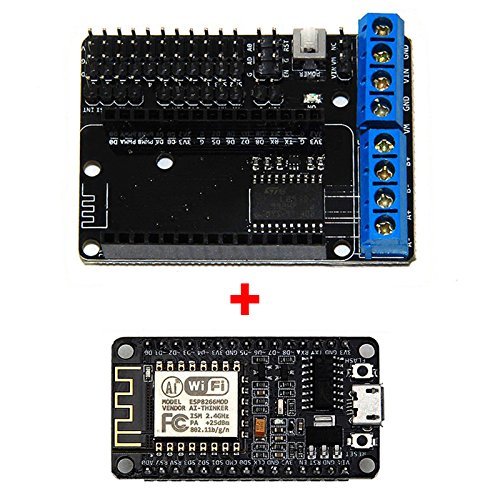
KOOKYE ESP8266 ESP-12E NodeMcu Lua WiFi Board Module + L293D Motor Drive Expansion Shield Board Kit DIY
Product Description
The following website would give you lots of creative ideas about how to develop the ESP8266 wifi modlue better.
The NodeMCU ESP8266 Kit Sample Tutorials-- http://kookye.com/?p=3545
The installation tutorial link-- http://kookye.com/?p=2886
The tutotrial on controlling tank car with ESP8266 module-- http://kookye.com/?p3290
Specification:
--ESP8266 WIFI MODULE--
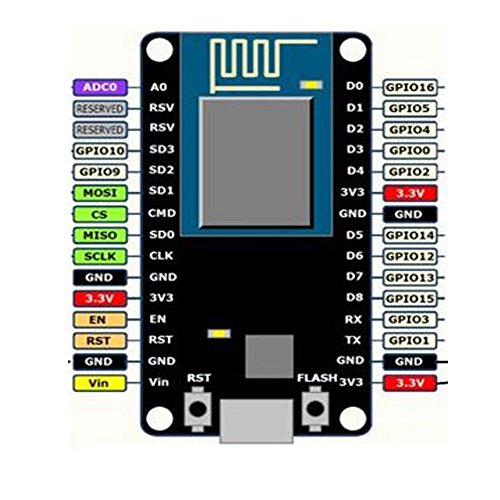
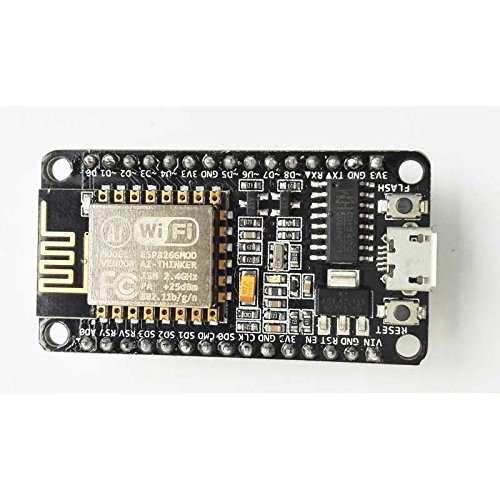
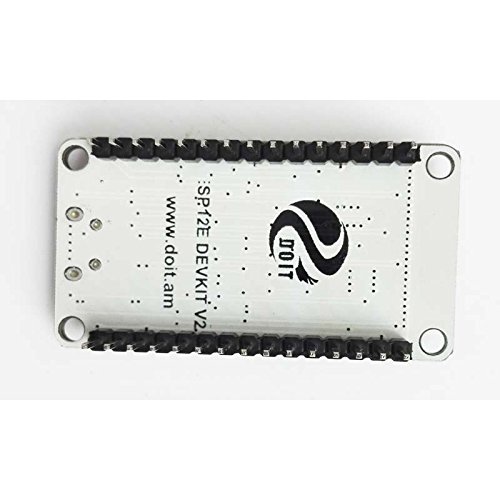
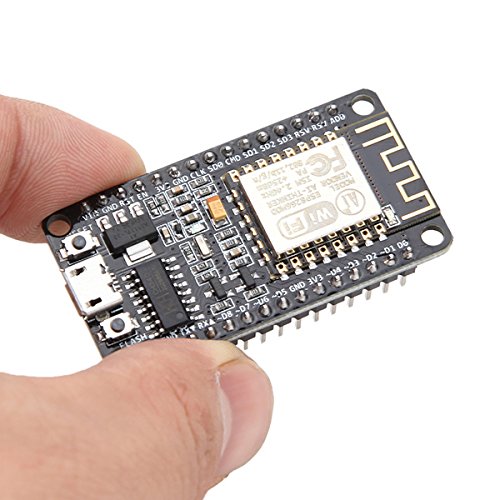
NodeMcu Lua ESP-12E wifi module
Upgraded to CH340 chip, Driver: http://en.doit.am/CH341SER.zip
Wireless 802.11 b / g / n standard
Support STA / AP / STA + AP three operating modes
Support UART / GPIO data communication interface
Support Smart Link Smart Networking
Transfer rate: 110-460800bps
Remote firmware upgrade (OTA)
Drive Type: Dual high-power H-bridge driver
Built-in TCP / IP protocol stack to support multiple TCP Client connections (5 MAX)
D0 ~ D8, SD1 ~ SD3: used as GPIO, PWM, IIC, etc., port driver capability 15mA
AD0: 1 channel ADC
--ESP8266 WIFI ESPANSION BOARD--
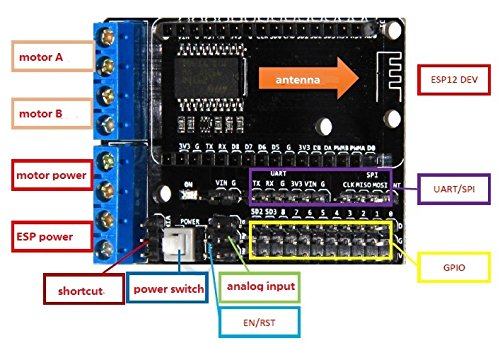
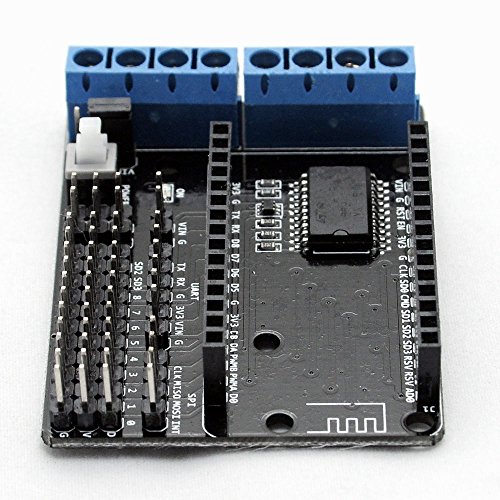
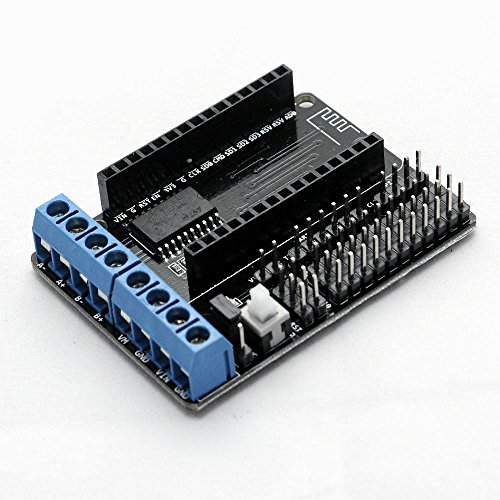
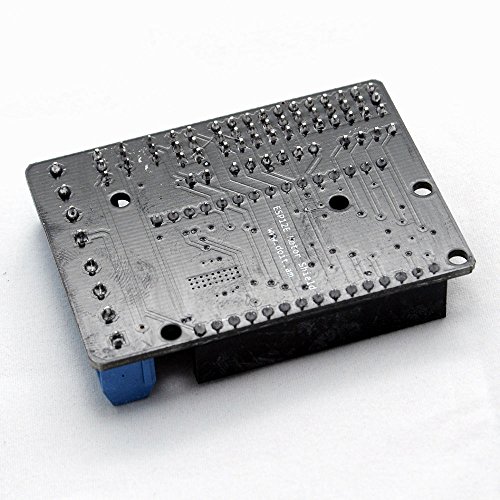
L293D Motor Drive Expansion Shield Board for ESP8266 wifi module (Onboard power switch)
Motor power supply (VM): 4.5V ~ 36V, can be powered separately
Control power (VIN): 4.5V ~ 9V (10VMAX), can be powered separately
Module provides short-circuiting sub (short the VM and VIN), you can easily use one power (must 4.5V ~ 9V) while completing motor drive and control; Expand two-way motor-driven
Drive Type: Dual high-power H-bridge driver
ESP12E Dev Kit Control Port: D1, D3 (A motor); D2, D4 (B motor)
Logic Operating current Iss: ≤60mA (Vi = L), ≤22mA (Vi = H)
Drive part of the work current Io: ≤1.2A
Maximum power dissipation: 4W (T = 90 ℃)
Control signal input level: High: 2.3V≤VIH≤VIN; Low: -0.3V≤VIL≤1.5V
Package include:
1x ESP8266 wifi module
1x ESP8266 wifi expansion board(L293D)
Feature
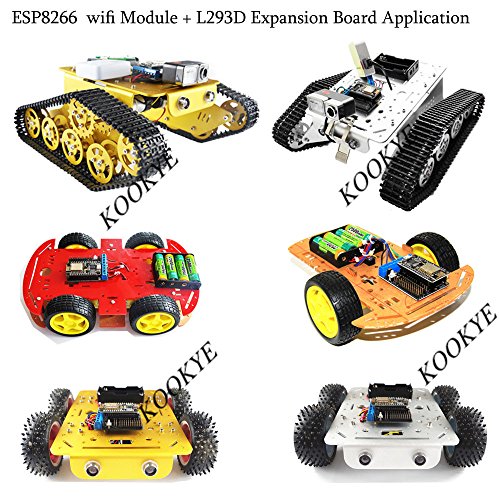
ESP8266 wifi motor drive expansion shield board for NodeMcu ESP-12E you could use this combination to control the robot smart car; ESP8266 wifi module can be widely use in daily life, such as wifi thermostat, wifi clock,wifi smart plug, wifi plant watering,wifi door alarm.The NodeMCU ESP8266 Kit Sample Tutorials( http://kookye.com/?p=3545);