How Does Activated Charcoal Whiten Teeth?
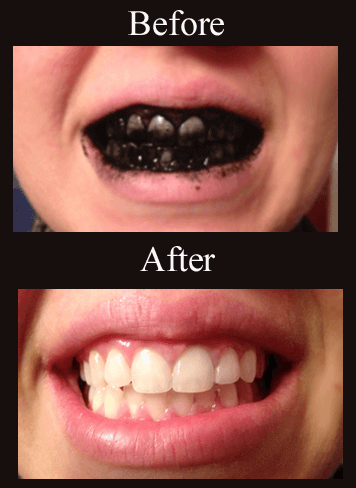
All of the black washes away and it makes your teeth feel extremely clean and smooth. After a few uses, my teeth were noticeably whiter too (you can sort of tell in the picture above… the lighting didn’t do it justice though).
Further research I’ve done on this showed that activated charcoal can actually be helpful in changing the pH and health of the mouth, and as such is effective in preventing cavities and killing the bad bacteria present in tooth decay and gingivitis.
How I Used Charcoal to Whiten Teeth
Dip a clean, wet toothbrush into the powdered charcoal (or dump a capsule of charcoal on the toothbrush). Lean over the container of charcoal and quickly put the charcoal covered toothbrush in the mouth (this is to protect your sink). Brush in small, gentle circles for 2 minutes, spit carefully and rinse really well.
Your mouth will feel amazingly clean…. your sink, not so much! Use as often as needed. Readers have also reported mixing the charcoal with water and swishing with it for two minutes.
Charcoal Whitening FAQs
I’ve received some of the same questions about this process multiple times so I’ve asked friends who are dentists and done further research to try to answer them:
Does it Stain Crowns/Veneers/Fillings?
I don’t have any of these in a visible place to be able to share any firsthand experience. Readers have reported trying this method of teeth whitening without a problem on these types of surfaces, but I’d definitely recommend checking with your dentist before using this or anything else if you have any of these.
Does Charcoal Pull Calcium From the Teeth?
Another question that I’ve received often. As always, check with a dentist if you have concerns about your teeth and before using any substance to whiten them. From the research I found, charcoal binds mostly to organic compounds and not minerals so there should not be a concern of it pulling calcium from the teeth.
Is Charcoal Too Abrasive for Teeth?
This is one concern that some dental professionals have expressed about whitening teeth with charcoal and it is a valid concern. I was unable to find any research that evaluated how abrasive charcoal was to the surface of the teeth. A suggestion from my friend who is a dentist is to use the charcoal without brushing or scrubbing.
She suggested that anyone worried about charcoal being abrasive or anyone with sensitive teeth could accomplish the same thing by simply dabbing charcoal onto the surface of the teeth with a finger or cotton swab and letting it sit on the surface of the teeth for two minutes before swishing with water and rinsing.
This would allow the charcoal to come in contact with the surface of the tooth long enough to remove surface stains without the brushing or scrubbing action that could be too abrasive.
What Kind of Stains Does Charcoal Work On?
My dentist friend also advised me that activated charcoal will only work on surface stains that it is able to bind to, especially those from drinks like coffee and tea. This is because it creates its absorbent properties which allow it to pull these stains from the teeth. It won’t usually work on teeth that have yellowed from antibiotics or other internal problems.