Product Profile
The mastic tree (Pistacia lentiscus) is a small tree, which thrives in the Mediterranean region. It ranges from Portugal on the one end of the Mediterranean to Turkey on the other, and is also found in parts of tropical Africa. It was known and widely used by the ancient Greeks and Romans to treat a variety of gastrointestinal complaints. As a matter of fact, ancient Greek physicians, such as Hippocrates, Dioscorides, Theophrastos, and Galenos, mentioned its properties and recommended its use. The astringent and aromatic qualities of the bark of the tree have been used traditionally to cleanse the breath and to tighten the gums.* Mastic gum is a resinous compound found in the trunk portion of the tree. Resins, such as the triterpene mastic acid, make up 90% of the gum. Volatile oil is responsible for much of the aromatic quality of the gum and can constitute up to 3% of the product. Mastic gum is viewed as very safe. The resin is sometimes used in food and beverage production. Furthermore, there are a number of trace elements found in mastic gum such as sodium, magnesium, potassium, iron, calcium, and manganese. Mastic has also been reported to possess strong antioxidant activity.*
Gastrointestinal Health
Stress, alcohol, drugs, smoking, and bad dietary habits can wreak havoc on the stomach. On the other hand, good dietary habits can contribute to the health of the stomach. For example, cabbage juice is famous for promoting gastrointestinal health. Similarly, when people with stomach concerns were put on a long-term (six months) high-fiber diet, the rate of improvement in gastrointestinal health was fast and significant. However, not many people are willing to drink cabbage juice, let alone follow a long-term protocol of a high-fiber diet. Mastic gum is a natural product that has been used for over 2,500 years to promote the health of the intestines, stomach, and liver.* However, it was not until the mid 1980s that researchers confirmed mastic’s efficacy in supporting gastric and duodenal cells and tissues.* One gram daily of mastic gum has been found to be safe and effective in supporting stomach health.* In addition to its antioxidant properties, scientists also believe mastic gum is beneficial to gastric tissue and balances gastric secretions.* These special qualities could explain mastic gum’s renowned effect on the health of the stomach and duodenum.*
Other Uses
Mastic gum has also been used for centuries to promote oral hygiene.* In fact, modern research has shown that mastic chewing gum may be an effective tool for promoting healthy teeth and gums.* Moreover, a study published in the April 20, 2007 issue of the Journal of Ethnopharmacology indicated that mastic gum could have hepatoprotective and cardioprotective properties in humans.* Previous animal studies had shown that mastic gum was beneficial in supporting liver health.*
Distinguishing Features:
- One daily serving provides a typical amount*
Product Description
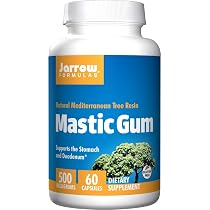
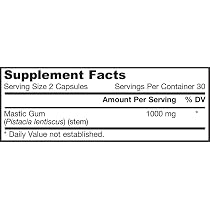
Mastic Gum 500 mg by Jarrow Formulas 60 Capsule Mastic Gum 500 mg 60 Capsule Product Mastic Gum contains natural resin from the mastic tree (Pistacia lentiscus) a shrub-like tree grown mainly in Greece and Turkey. Composed of a resinous exudate containing essential oils mastic has been used for centuries by traditional healers for stomach distress. Mastic Gum supports gastric and duodenal cells and tissues. Historically used for more than 2500 years Supports gastrointestinal and oral health Provides antioxidants and additional beneficial nutrients Natural and safe for occasional stomach relief Suggested Use As a dietary supplement take 2 capsules per day with water or juice before breakfast - Or as directed by your healthcare professional. Supplement Facts Serving Size 2 Capsules Servings Per Container 30 Amount Per Serving Daily Value Mastic Gum (Pistacia lentiscus) (stem) 1000 mg Percent Daily Values are based on a 2 000 calorie diet Other Ingredients Cellulose magnesium stearate (v
Ingredients
Magnesium stearate (vegetable source), silicon dioxide and cellulose. Capsule consists of titanium dioxide and gelatin. No wheat, no gluten, no soybeans, no dairy, no egg, no fish/shellfish, no peanuts/tree nuts.
