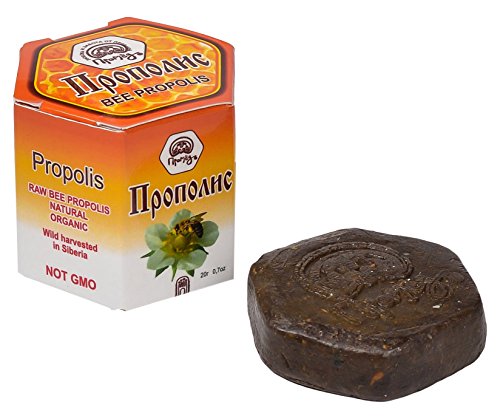
Studio : Promed Publisher : Promed Binding : Health and Beauty Product Description
Propolis is in no way a new discovery. The use of propolis goes back to ancient times, at least to 300 bc, and it has been used as a medicine in local and popular medicine in many parts of the world, both internally and externally. Egyptians, Greeks and romans reported the use of propolis for its general healing qualities and for the cure of some lesions of the skin. Propolis has always been reputed as an anti-inflammatory agent and to heal sores and ulcers. Ancient Egyptians used it to embalm their dead, and more recently it was used during the boer war for healing wounds and tissue regeneration (ghisalberti, 1979). However, its use continues today in remedies and personal products, and the list of preparations and uses is endless. It is still one of the most frequently used remedies in the Balkan states (bank ova, 2005a), and it has only been in the last decades that scientists have investigated its constituents and biological properties. Propolis is a resinous material collected by bees from bud and exudates of the plants, which is transformed in the presence of bee enzymes. Its color varies from green, red to dark brown. Propolis has a characteristic smell and shows adhesive properties because it strongly interacts with oils and proteins of the skin. In general, propolis in nature is composed of 30% wax, 50%resin and vegetable balsam, 10% essential and aromatic oils, 5% pollen, and other substances (burdock, 1998). Etymologically, the Greek word propolis means pro, for or in defense, and polis, the city, that is "defense of the hive". Bees use it to seal holes in their honeycombs, smooth out internal walls as well as to cover carcasses of intruders who died inside the hive in order to avoid their decomposition. Propolis also protects the colony from diseases because of its antiseptic efficacy and antimicrobial properties (salvation et al., 2005).
0
|