
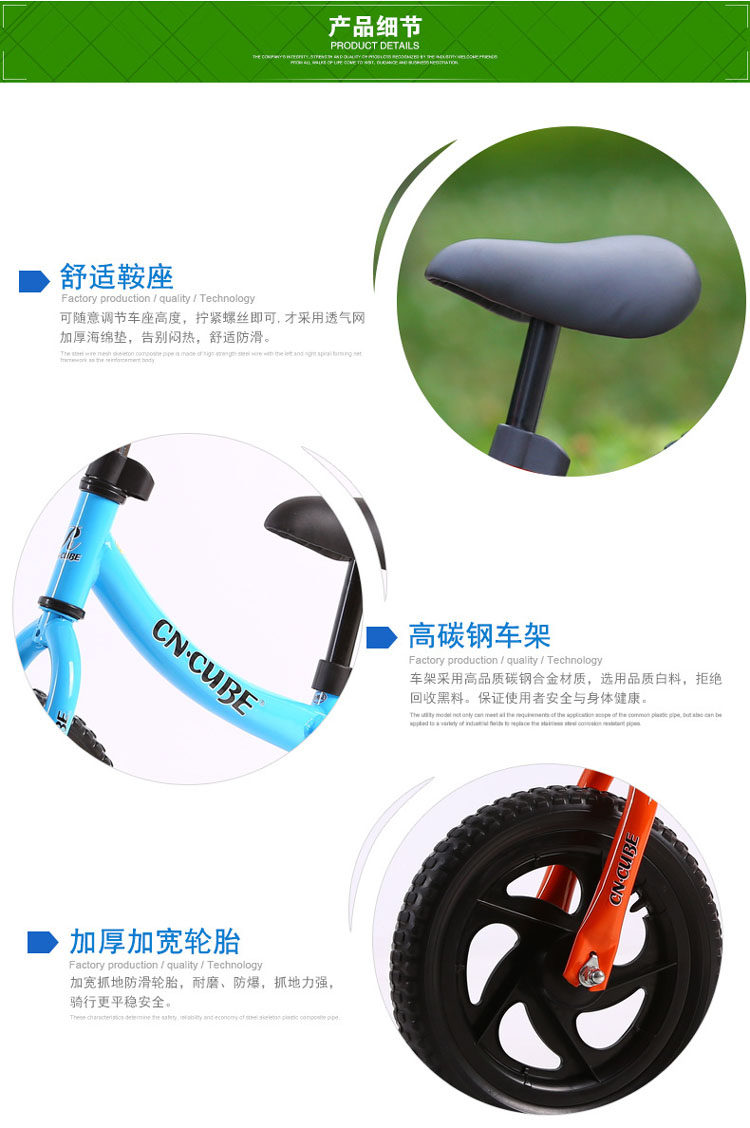
What is a balance bike?
A balance bike is a two-wheeled pedal-less bike that teaches kids as young as 18-months to balance on two wheels. After a brief learning period, toddlers and kids learn to ride, jump and coast on their bikes with no assistance from their parents. Balance bikes are a replacement for tricycles and training wheels as they are designed to be used during the ages that a child would typically ride a tricycle or use training wheels. With the skills learned from a balance bike, riders as young a 3 years old transition straight to a regular kids bike without the assistance of training wheels. Balance bikes ride like regular bikes and don’t get stuck on uneven surfaces, easily gliding over rocks, dirt, curbs and even jumps. They are sometimes referred to as glider bikes, strider bikes, run bikes or pedal less bikes.
Why are balance and coordination important?
Age appropriate balance and coordination allows the child to be involved in the sports participation with a reasonable degree of success as it aids fluid body movement for physical skill performance (e.g. walking a balance beam or playing football). The involvement in sport is helpful in maintaining self regulation for daily tasks as well as developing a social network and achieving a sense of belonging in a community or social setting. It also helps children develop and maintain appropriate controlled body movement during task performance which, when effective, limits the energy required thus minimising fatigue.
With good balance and coordination there is less likelihood of injury as the child is likely to have appropriate postural responses when needed (e.g. putting hands out to protect themselves when they fall of their bike). The physical attributes of balance and coordination also allow appropriate posture for table top tasks and subsequent success at fine motor tasks.