|
Description
High Quality Products For Lady and Gentlemen

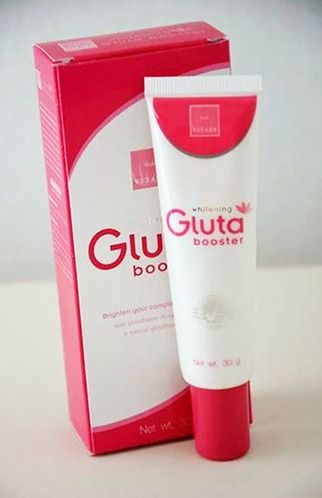
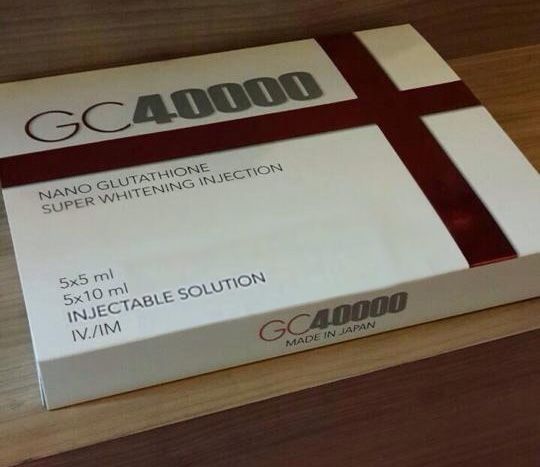
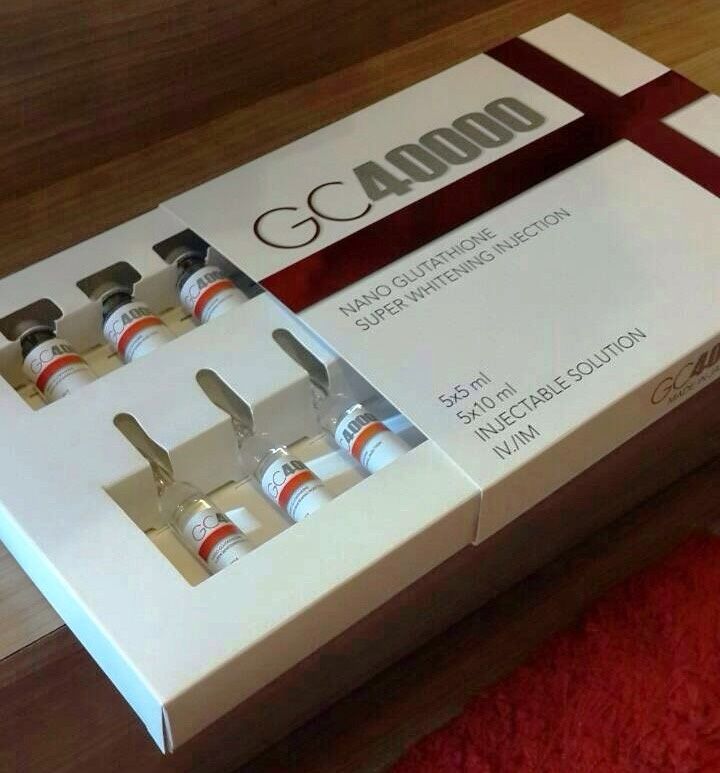
The skin glow touch from the first use. Formula 2 x Faster "Glutathione Booster". Additionally, glutathione, whitening skin. Enriched with natural extracts to stimulate glutathione, whitening skin. Ready to show off skin naturally.
- NANO WHITE Special small Glutathione . Contained in nano-sized liposomes. Enhance the absorption into the skin deeply. Addition of glutathione to the skin. Radiance to the face. - Hydrolyzed Eruca Sativa Extract(Rocket Salad extract) Stimulate glutathione glutathione enzymes in the skin by accelerating the GCL (Glutamate-Cysteine ??Ligase). This enzyme is important in the formation of glutathione skin. - Multi Vitamin ACE Vitamin A, vitamin C, vitamin E helps the skin moist. Soft skin and antioxidant properties. Anti-Aging And nourishes the skin naturally.

Indication : Apply a thin layer over face before make-up and at night time
|
Indication :Apply a thin layer over face before make-up and at night time
|
|
Manufactured :Vitara
|
|
Size :30g / Bottle
|
|
Condition : Brand new & Never used with a seal pack.
|
|
|

Glutamate�cysteine ligase
Glutamate Cysteine Ligase (GCL) (EC 6.3.2.2), previously known as gamma-glutamylcysteine synthetase (GCS), is the first enzyme of the cellular glutathione (GSH) biosynthetic pathway that catalyzes the chemical reaction:
L-glutamate + L-cysteine + ATP rightleftharpoons gamma-glutamyl cysteine + ADP + Pi
GSH, and by extension GCL, is critical to cell survival. Nearly every eukaryotic cell, from plants to yeast to humans, expresses a form of the GCL protein for the purpose of synthesizing GSH. To further highlight the critical nature of this enzyme, genetic knockdown of GCL results in embryonic lethality.[1] Furthermore, dysregulation of GCL enzymatic function and activity is known to be involved in the vast majority of human diseases, such as diabetes, Parkinson's disease, Alzheimers disease, COPD, HIV/AIDS, and cancer.[2][3] This typically involves impaired function leading to decreased GSH biosynthesis, reduced cellular antioxidant capacity, and the induction of oxidative stress. However, in cancer, GCL expression and activity is enhanced, which serves to both support the high level of cell proliferation and confer resistance to many chemotherapeutic agents
|
Glutamate cysteine ligase (GCL) transgenic and gene-targeted mice for controlling glutathione synthesis
|
| Mohar I, Botta D, White CC, McConnachie LA, Kavanagh TJ. |
Abstract
The tripeptide glutathione (GSH) has important antioxidant properties, scavenges free radicals, and serves as a cofactor for glutathione S-transferase conjugation of many xenobiotics. GSH is synthesized in two steps. The first and, often, rate-limiting step is the formation of ?-glutamylcysteine, which is catalyzed by the inducible heterodimeric enzyme glutamate cysteine ligase (GCL). The two subunits of GCL are the catalytic subunit (GCLC) and the modifier subunit (GCLM). In this unit, the generation and basic characterization methodologies of transgenic mouse models that have been developed to (1) conditionally over express both GCL subunits; (2) lack GCLM (Gclm null); and (3) create a hybrid between Gclm conditional over-expressing mice on a Gclm null genetic background are discussed. These models can be used to explore the fundamental role of GCLC and GCLM in GSH synthesis, as well as the toxicological role of GSH and its synthesis in xenobiotic metabolism and response to oxidative stress.
|
| University of Washington, Seattle, Washington, USA. |
|
Hydrolyzed Eruca Sativa Extract(Rocket Salad extract)
Eruca sativa (syn. E. vesicaria subsp. sativa (Miller) Thell., Brassica eruca L.) is an edible annual plant, commonly known as salad rocket,[1] rucola, rucoli, rugula, colewort, roquette and, in the United States, arugula. It is sometimes conflated with Diplotaxis tenuifolia, the perennial wall rocket, another plant of the Brassicaceae family, which in the past was used in the same manner. Eruca sativa, which is widely popular as a salad vegetable, is a species of Eruca native to the Mediterranean region, from Morocco and Portugal in the west to Syria, Lebanon and Turkey in the east.[2][3] The Latin adjective sativa in the plant's binomial is derived from satum, the supine of the verb sero,[4] meaning "to sow", indicating that the seeds of the plant were sown in gardens. Eruca sativa differs from E. vesicaria in having early deciduous sepals. Some botanists consider it a subspecies of Eruca vesicaria: E. vesicaria subsp. sativa.[5] Still others do not differentiate between the two.

Other common names include garden rocket,[5] or more simply rocket (British, Australian, Canadian, South African and New Zealand English),[3] and eruca.[3] The English common name, rocket, derives from the French roquette, a diminutive of the Latin word eruca, which designated an unspecified plant in the Brassicaceae family (probably a type of cabbage).[7] Arugula, the common name now widespread in the United States, entered American English from non-standard (dialect) Italian. (The standard Italian word is rucola, a diminutive of the Latin "eruca"). The Oxford English Dictionary dates the first appearance of "arugula" in American English to a 1960 New York Times article by food editor and prolific cookbook writer Craig Claiborne.[8]
Eruca sativa grows 20�100 centimetres (8�39 in) in height. The leaves are deeply pinnately lobed with four to ten small lateral lobes and a large terminal lobe. The flowers are 2�4 cm (0.8�1.6 in) in diameter, arranged in a corymb in typical Brassicaceae fashion; with creamy white petals veined with purple, and with yellow stamens; the sepals are shed soon after the flower opens. The fruit is a siliqua (pod) 12�35 millimetres (0.5�1.4 in) long with an apical beak, and containing several seeds (which are edible). The species has a chromosome number of 2n = 22
Reference : 1.USDA Plants Profile: Eruca vesicaria subsp. sativa Med-Checklist: Eruca sativa. 2.Blamey, M. & Grey-Wilson, C. (1989). Flora of Britain and Northern Europe. ISBN 0-340-40170-2. 3.See the wiktionary definition of sativa. 4.Flora of NW Europe: Eruca vesicaria Flora Europaea 5.Oxford English Dictionary 6.Claiborne, Craig (May 24, 1960). "A Green by Any Name: Pungent Ingredient Is Cause of Confusion for City Shopper; Arugula � or Rocket � Is the Secret of Experts' Salads". The New York Times. p. 33. 8.Huxley, A., ed. (1992). New RHS Dictionary of Gardening. 9.Macmillan ISBN 0-333-47494-5. 10.http://www.smartgardener.com/plants/599-arugula-arugula/guide/pests/771-nematodes 11.NutritionData.com, Arugula, Raw 12.Upton, Julie, RD. "7 Foods for Better Sex". Health.com. Retrieved July 5, 2010. 13.Wright, Clifford A. (2001). Mediterranean Vegetables. Harvard Common Press. p. 27. ISBN 9781558321960.
|
Glucosinolates, Myrosinase Hydrolysis Products, and Flavonols Found in Rocket (Eruca sativa and Diplotaxis tenuifolia)
|
| Luke Bell * and Carol Wagstaff |
Abstract
Rocket species have been shown to have very high concentrations of glucosinolates and flavonols, which have numerous positive health benefits with regular consumption. This review highlights how breeders and processors of rocket species can utilize genomic and phytochemical research to improve varieties and enhance the nutritive benefits to consumers. Plant breeders are increasingly looking to new technologies such as HPLC, UPLC, LC-MS, and GC-MS to screen populations for their phytochemical content to inform plant selections. This paper collates the research that has been conducted to date in rocket and summarizes all glucosinolate and flavonol compounds identified in the species. The paper emphasizes the importance of the broad screening of populations for phytochemicals and myrosinase degradation products, as well as unique traits that may be found in underutilized gene bank resources. This review also stresses that collaboration with industrial partners is becoming essential for long-term plant breeding goals through research..
|
| J. Agric. Food Chem., 2014, 62 (20), pp 4481�4492 DOI: 10.1021/jf501096x Publication Date (Web): April 29, 2014 |
|
L-Glutathione
Glutathione has an interesting side effect on the body that some see as unwanted and other see as helpful. Glutathione is an inhibitor of melanin in the skin, meaning that it actually causes the pigment of the skin to lighten. Primarily produced in Asia, in countries like Japan and the Philippines, glutathione soaps and lotions claim a number of skin benefits. Glutathione cosmetics, besides lightening the pigment of the skin, also claims to reduce blemishes and dark spots, melasma, chloasma, hyperpigmentations freckles and acne scars, as well as return a rosiness to the skin that's often associated with youth and vitality.
Because glutathione has been called a master antioxidant, producers of glutathione supplements and lotions also claim that glutathione when used on the skin is able to reduce and reverse some of the effects of age and damage from oxidization. Oxidization is one of the main causes of aging on the skin, and many cremes exist that are full of antioxidants and claim to help reverse some of the causes of aging.
|